
Private Label Beauty Products for Boutiques
Build a focused custom beauty line around the customers you already understand, a clear price ladder, a cohesive shelf story, and a realistic plan for learning what earns a reorder.
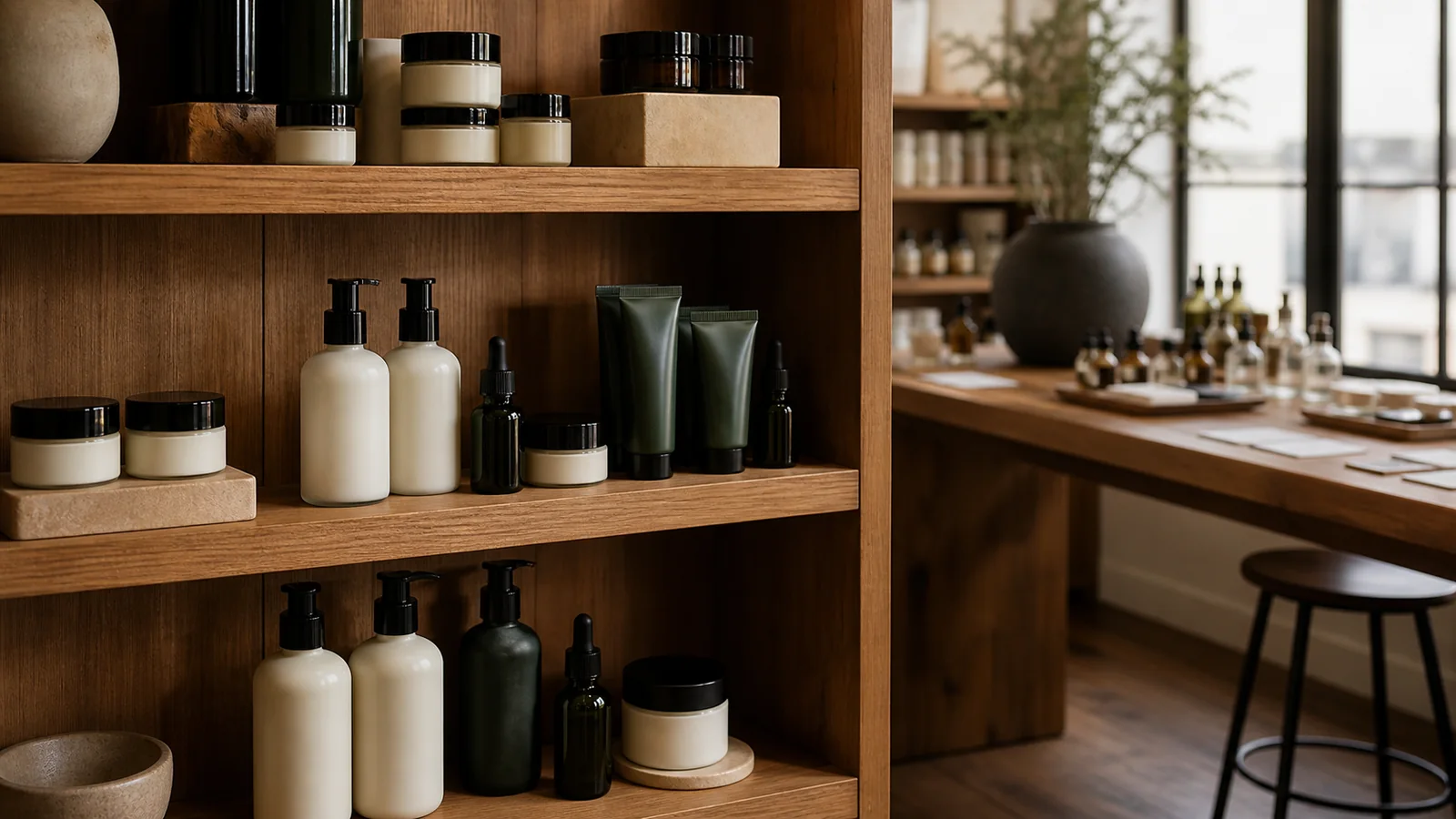
How Should a Boutique Start a Private Label Beauty Line?
A boutique should start with the smallest assortment that tells one clear shelf story for a known customer. Define the customer occasion, the role of each product, the intended price position, merchandising space, cosmetic claims, packaging behavior, opening units, and the evidence that would justify a reorder. Test every proposed SKU for customer fit, price-ladder purpose, visual coherence, and a distinct reason to repurchase. Shay Labs develops custom formulations and manufactures cosmetics rather than offering a ready-made stock catalog. Direct manufacturing for production-ready brands generally begins at 5,000 units. Qualifying founder, Pilot, or Accelerator projects may begin at 500 units depending on formula, product, packaging, components, testing, and production requirements. A focused launch creates cleaner customer feedback than a broad assortment built on untested assumptions.
How Should a Boutique Choose Its First Beauty Products?
Act like an assortment editor, not a catalog shopper. Every first-launch product should pass four gates before formula development, packaging, and quantity discussions move forward.
Customer match
Name the shopper, occasion, routine, preferences, and cosmetic need the product is meant to serve.
Price role
Define whether the item anchors, opens, or extends the planned beauty price ladder without promising a margin.
Shelf story
Explain how the product reads beside the rest of the assortment in role, package, size, and visual hierarchy.
Reorder evidence
Decide which sell-through, feedback, usage, or repeat-purchase signals will trigger review and replenishment.
The one-sentence shelf test
“For this customer and occasion, this product earns its shelf space because it performs this distinct cosmetic job at this place in our assortment.” If that sentence is vague or interchangeable, the SKU needs a sharper role.
Do not advance a duplicate role
- Does it answer a different customer need?
- Does it occupy a clear price or merchandising role?
- Can staff explain it without confusing it with another SKU?
- Is there a credible way to learn whether it deserves a reorder?
What Makes a Boutique Beauty Line Different From a General Retail Launch?
A retail-ready manufacturing plan often begins with a defined retailer delivery. A boutique-exclusive line begins earlier: with customer intimacy, limited shelf space, staff-assisted discovery, gifting occasions, and the need for a coherent branded point of view.
Curated customer fit
Use what the store knows about its shoppers, routines, gifting behavior, aesthetic preferences, and common questions to define the assortment brief.
One understandable shelf story
Plan how product roles, names, package forms, sizes, and price positions read together within the space actually available.
Reorder before expansion
Identify who will track sell-through, product questions, feedback, returns, and reorder signals before adding another category or SKU.
How Do Customer Profile and Price Architecture Shape the Assortment?
Price is not only a number on a shelf. In a boutique assortment, it helps the shopper understand entry points, core choices, gifts, and premium extensions. Share target retail thinking as a planning input, not as a guaranteed cost or margin outcome.
Define a low-commitment role only if the format, size, packaging, and project economics can support it after review.
Name the product with the clearest recurring cosmetic role and explain why a customer would understand when to replenish it.
Describe the occasion, pairing logic, presentation needs, and whether the items must also work independently.
Specify the meaningful formula, usage, size, package, or experience distinction rather than relying on premium language alone.
Should a Boutique Launch More Products or Carry More Depth?
Choose enough breadth to make the concept understandable and enough depth to keep the strongest role available. Do not spread the opening order across extra SKUs merely to make the shelf appear complete.
Use breadth when
- Each SKU has a non-overlapping customer and cosmetic job
- The price ladder remains easy to explain
- Merchandising space supports the full story
- Staff can describe the differences consistently
- Opening quantities and reorder monitoring remain workable
Use depth when
- One hero role carries the clearest customer relevance
- Dividing units would make availability fragile
- Feedback on the core concept should precede expansion
- Additional products would mostly duplicate function or price
- The store needs a cleaner first read on sell-through
How Should Packaging Support the Boutique Shelf Story?
Begin with use, merchandising, and supply requirements. A beautiful component that dispenses poorly, disrupts shelf space, or lacks a clear sourcing plan is not a complete packaging decision.
Review the whole shelf, not one container
Map front-facing width, height relationships, closure and dispensing behavior, tester handling, storage, label area, decoration, secondary packaging assumptions, and how customers compare products. Formula-to-package compatibility and component availability still require project-specific review.
Review Cosmetic PackagingState how much is used, where it is used, expected pickup or flow, closure handling, and consumer storage.
Record available width, height, grouping, facing count, tester position, security, and replenishment access.
Define which item leads, how variants differ, and how the line reads without depending on tiny copy.
Name proposed component suppliers, sourcing responsibility, decoration, artwork status, lead-time questions, and alternatives to review.
How Can a Boutique Plan Quantities Without Pretending Demand Is Certain?
Provide units by SKU and explain the reasoning behind them. Separate customer-facing inventory from the other uses that consume finished goods, then define who reviews actual performance.
What Belongs in a Boutique Beauty Manufacturing Quote Request?
Separate confirmed decisions, preferences, and open questions. A useful request makes the assortment logic visible alongside formula, package, quantity, and launch inputs.
Locations, sales channels, customer profile, key occasions, current beauty assortment, merchandising space, and staff selling model.
Role of each proposed SKU, customer need, shelf relationship, price position, differentiation, and reason it deserves launch space.
Custom development or authorized formula status, intended cosmetic use, sensory targets, references, exclusions to discuss, and open questions.
Proposed cosmetic appearance, cleansing, moisturizing, conditioning, or sensory language plus draft directions and terms needing review.
Sizes, dispensing needs, shelf constraints, testers, proposed components and suppliers, decoration, artwork, sourcing owner, and compatibility questions.
Units by SKU, opening allocation, channels, target window, decision makers, replenishment assumptions, and evidence required before expansion.
Which Shay Labs Route Fits the Boutique Project?
Shay Labs is a Woodstock, Illinois U.S. custom formulation and contract manufacturer with more than 15 years of manufacturing experience. The facility is cGMP and ISO 22716:2007 certified. Shay Labs develops custom formulations and manufactures cosmetics and oral rinses. It does not offer a ready-made stock catalog and does not manufacture supplements or toothpaste.
Founder, Pilot, or Accelerator route
Use this path when product roles, formula, packaging, price architecture, or opening plan still need structured development. Qualifying projects may begin at 500 units depending on requirements.
Explore the AcceleratorProduction-ready boutique brand
Use this path when authorized formula status, specifications, components, quantities, responsibilities, claims direction, and operating inputs are developed enough for direct review, which generally begins at 5,000 units.
Discuss direct manufacturingWhat Should Boutique Owners Ask a Cosmetic Manufacturer?
Does Shay Labs offer a ready-made private label beauty catalog?
No. Shay Labs develops custom formulations and manufactures products. It does not sell an off-the-shelf or ready-made stock catalog. Bring your customer, assortment roles, formula direction, packaging, quantities, and launch plan for review.
Which beauty products should a boutique launch first?
Start with the smallest assortment that creates a coherent shelf story for a known customer. Every SKU should have a distinct cosmetic job, price-ladder role, merchandising purpose, staff explanation, and proposed reorder signal.
Can Shay Labs develop custom beauty formulas for a boutique?
Shay Labs develops custom formulations and manufactures cosmetics. Feasibility depends on the intended cosmetic use, formula direction, claims, package, components, testing, quantity, and production requirements. Submit the proposed project for specific review.
How many products should a boutique include in its first assortment?
There is no universal SKU count. Use the smallest set that is understandable and non-redundant while keeping enough unit depth to operate. Add a product only when it has a clear customer, cosmetic, price, and shelf role.
Should a boutique include target retail prices in the inquiry?
Yes, proposed retail positions can help explain the intended price architecture and customer context. Treat them as planning inputs rather than guaranteed costs or margins because project economics depend on the complete formula, package, quantity, component, testing, and production requirements.
Should tester and launch units be included in quantity planning?
Include all anticipated uses of finished goods in the opening allocation, including retail shelf stock, back stock, testers where appropriate, education, approved launch use, photography, and a reasoned reserve. Provide units by SKU and identify assumptions.
What packaging information should a boutique provide?
Provide intended sizes, dispensing behavior, shelf constraints, tester plans, proposed components and suppliers, decoration, artwork status, sourcing responsibility, storage assumptions, compatibility questions, and alternatives that remain open.
What are Shay Labs’ minimum order quantities?
Direct manufacturing for production-ready brands generally begins at 5,000 units. Qualifying founder, Pilot, or Accelerator projects may begin at 500 units depending on formula, product, packaging, components, testing, and production requirements.
What information helps Shay Labs review a boutique beauty project?
Share the store and customer profile, Shelf-to-Reorder Assortment Map, product roles, formula and claims direction, packaging and merchandising needs, quantities by SKU, opening allocation, target window, decision makers, and open questions.
How is a boutique beauty line different from a salon or spa product line?
A boutique line begins with retail customer fit, price architecture, merchandising space, gifting or discovery occasions, staff explanation, and reorder learning. Salon and spa lines often begin with professional service workflow, backbar use, treatment sequencing, and a professional-to-home product handoff.
Ready to Plan a Boutique-Exclusive Beauty Assortment?
Share your customer profile, proposed product roles, price architecture, formula direction, merchandising space, packaging ideas, units by SKU, and reorder assumptions. Shay Labs can help identify the appropriate development or manufacturing path.