
Private Label Edge Control Manufacturer
Develop custom edge control around pickup, placement, set, finish, residue, rework, and compact packaging rather than a generic “strong hold” claim.
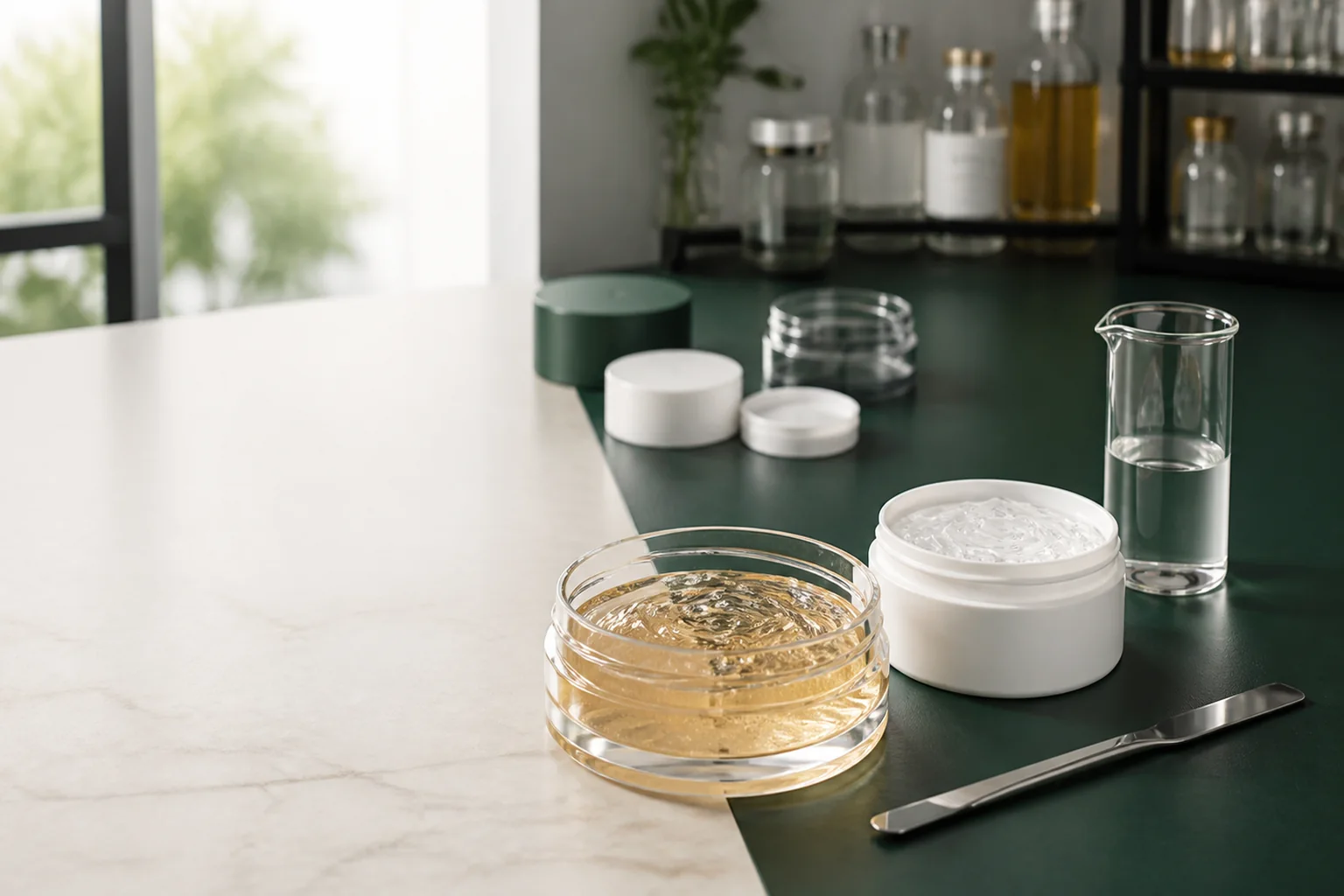
How Do You Start a Private Label Edge Control Project?
Start a private label edge control project by defining the precision-use experience before selecting ingredients or a jar. Document how the product should pick up, spread onto a small area, smooth, set, look, feel, resist visible residue, and rework later. Include the target customer, application tool, hold and finish priorities, fragrance, package opening, fill size, cosmetic claims, quantity, and launch context. Shay Labs develops custom formulations and manufactures cosmetics rather than supplying a ready-made stock catalog. Direct manufacturing for production-ready brands generally begins at 5,000 units. Qualifying founder, Pilot, or Accelerator projects may begin at 500 units depending on formula, product, packaging, components, testing, and production requirements. A repeatable Edge Control Use-Test Card turns subjective words like “strong” or “clean” into useful development feedback.
What Should an Edge Control Brief Define Before Formulation Begins?
Edge control is experienced in short, visible moments. A useful brief defines each moment separately so sample feedback can identify where a concept succeeds, where it conflicts, and which tradeoff matters most.
Pickup
How easily a finger or tool collects a controlled amount from the package.
Placement
How accurately the product transfers to the intended small area without unwanted spread.
Smoothing
Drag, glide, brush interaction, working time, and ability to shape before set.
Set
How quickly the product stops moving and what touch or stiffness develops.
Finish
Natural, satin, or glossy appearance plus tactile feel after application.
Wear
Observable residue, flaking, tack, transfer, shine change, and shape over the chosen test period.
Rework
What happens with water, more product, brushing, restyling, or next-day use.
Write the priority sentence
“For this customer and use occasion, the product should provide this pickup and placement experience, then set to this finish with these residue and rework priorities.” Rank the priorities when they compete.
Keep references specific
For every reference product, note exactly what to emulate or avoid: jar access, pickup, glide, set speed, finish, tack, residue, stiffness, fragrance, or next-day behavior. “Make it like this” is not enough.
How Is Edge Control Different From Hair Gel or Styling Pomade?
These formats can overlap in appearance or ingredients, but the product brief should give each one a clear job. Edge control is distinguished by precision application, a narrow styling area, compact package access, and close-up expectations for finish and residue.
Edge control
Define controlled pickup, exact placement, brush or fingertip interaction, set, close-range finish, residue, and rework on a targeted styling area.
Hair gel
Often addresses broader styling, distribution, movement, hold, viscosity, dispensing, and whole-style behavior across more hair.
Styling pomade
May emphasize pliability, texture, polish, separation, or restyling. The intended use must be stated rather than inferred from the product name.
How Should a Brand Evaluate Edge Control Samples?
Do not change the application amount, tool, starting condition, or set method while comparing formulas. Control the use method first, then record what happened at agreed observation points.
Pickup and placement
Amount collected, stringing, drip, transfer from tool, precision, spread, drag, and working time.
Shape and touch
Smoothing response, set speed, movement, stiffness, tack, and whether the intended shape remains easy to refine.
Close-up appearance
Shine level, visible film, residue, whitening, flakes, buildup perception, and how the finish changes.
Later behavior
Transfer, water response, brushing, added product, restyling, next-day pickup, and perceived accumulation.
Control on every sample
- Application area and starting condition
- Measured or standardized amount
- Finger, brush, comb, or applicator
- Product order and set method
- Observation times and environment notes
Record before discussing
- Observation, not only preference
- Moment when the issue appeared
- Severity and repeatability
- Priority relative to other targets
- One requested change at a time
Which Jar and Applicator Decisions Matter for Edge Control?
A compact jar can look straightforward while creating meaningful differences in access, dose control, closure handling, product protection, decoration, shipping, and packout. Review the component with the formula and use method rather than choosing it on appearance alone.
Package handoff checklist
Bring component specifications, supplier and sourcing owner, samples if available, fill target, decoration files, seal assumptions, applicator details, storage orientation, shipping context, compatibility questions, and acceptable alternatives.
Do not assume an accessory is automatically included with the jar or that a visually similar component will behave the same.
What Cosmetic Claims Fit Edge Control Positioning?
Describe styling, appearance, manageability, and sensory experience accurately. Hairline placement does not turn a cosmetic styler into a hair-growth, scalp-treatment, or medical product.
Smoothing, shaping, defining small sections, managing flyaways, and supporting the intended finished look when accurate.
Sleek appearance, shine level, finish, touch, stiffness, tack, residue visibility, and sensory feel using supportable language.
Application amount, tool, area, smoothing method, product order, set method, and rework guidance that customers can follow.
How Does Edge Control Move From Concept to Manufacturing?
The path is a sequence of decisions, not a single quote. Formula direction, evaluation method, component access, claims, quantities, and responsibilities must become coherent enough for the appropriate project route.
Define use
Complete the Seven-Moment Use-Test Card, customer, occasion, references, priorities, package assumptions, and line role.
Develop and compare
Align custom formulation direction and structured sample feedback with the intended cosmetic experience.
Resolve the system
Coordinate formula, jar, closure, seal, applicator, artwork, claims direction, responsibilities, and project requirements.
Review production readiness
Confirm that authorized formula status, components, quantities, specifications, and dependencies fit the correct manufacturing pathway.
What Belongs in an Edge Control Quote Request?
Separate confirmed inputs, preferences, and open questions. A useful inquiry makes the intended precision-use experience and operational readiness visible instead of asking for a price against “strong hold edge control.”
Target user, styling area, professional or home context, routine, application frequency, tool, product order, set method, and desired line role.
Pickup, placement, smoothing, set, finish, wear, rework, priorities, tradeoffs, references, and observations behind each preference.
Custom development or authorized formula status, intended cosmetic use, sensory targets, fragrance, preferences or exclusions to discuss, and open questions.
Draft cosmetic positioning, instructions, appearance language, duration questions, residue language, and wording that requires review.
Jar, fill size, opening, closure, seal, supplier, sourcing owner, decoration, artwork, applicator, packout, storage, and alternatives.
Units, channels, target window, readiness, decision makers, related products, replenishment assumptions, and unresolved dependencies.
Which Shay Labs Route Fits an Edge Control Project?
Shay Labs is a Woodstock, Illinois U.S. custom formulation and contract manufacturer with more than 15 years of manufacturing experience. The facility is cGMP and ISO 22716:2007 certified. Shay Labs develops custom formulations and manufactures cosmetics and oral rinses. It does not offer a ready-made stock catalog and does not manufacture supplements or toothpaste.
Founder, Pilot, or Accelerator route
Use this route when concept, custom formulation, evaluation method, jar, applicator, or launch plan needs structured development. Qualifying projects may begin at 500 units depending on project requirements.
Explore the AcceleratorDirect manufacturing review
Use this route when authorized formula status, specifications, components, claims direction, quantities, and responsibilities are developed enough for direct review, which generally begins at 5,000 units.
Discuss direct manufacturingWhat Should Brands Ask an Edge Control Manufacturer?
Does Shay Labs sell ready-made edge control from a stock catalog?
No. Shay Labs develops custom formulations and manufactures cosmetics rather than offering an off-the-shelf stock catalog. Bring a defined customer, Use-Test Card, formula direction, packaging plan, quantity, and launch context for project review.
Can Shay Labs develop a custom edge control formula?
Shay Labs develops custom cosmetic formulations. An edge control project is reviewed against its intended use, pickup, placement, smoothing, set, finish, residue, rework, fragrance, package, components, testing, quantity, and production requirements.
How is edge control different from regular hair gel?
Edge control is usually a precision-applied styling format for a small area, so pickup, controlled placement, brush or fingertip interaction, compact packaging, finish, residue, and rework carry extra importance. Hair gel often addresses broader styling, movement, and dispensing across more hair.
How should a brand test edge control samples?
Use the same application area, starting condition, amount, tool, smoothing method, set method, observation points, and rework method for every sample. Record pickup, stringing, drag, placement, set, shine, tack, visible residue, flaking, transfer, stiffness, and next-day rework.
What kind of package works for edge control?
A low-profile jar is common, but there is no universal best package. Review opening diameter, finger or tool access, closure, liner or seal plan, fill size, formula pickup, decoration, storage, shipping, and compatibility as part of the specific project.
Can an edge brush or applicator be included with the product?
An applicator can be considered as part of the customer experience, but sourcing, materials, dimensions, packout, labeling, and compatibility are separate project decisions. Identify who supplies it and how it will be packaged before requesting a quote.
What cosmetic claims can an edge control brand consider?
Accurate cosmetic positioning may discuss styling, smoothing, shaping, sleek appearance, shine, finish, touch, and manageability. Avoid unsupported hair-growth, hair-loss, scalp-treatment, medical, permanent-result, guaranteed-duration, or universal no-flake claims.
What are Shay Labs’ minimum order quantities for edge control?
Direct manufacturing for production-ready brands generally begins at 5,000 units. Qualifying founder, Pilot, or Accelerator projects may begin at 500 units depending on formula, product, packaging, components, testing, and production requirements.
What information helps Shay Labs review an edge control quote request?
Share the target customer and use occasion, seven-moment Use-Test Card, formula status, references, cosmetic claims direction, directions, package and applicator details, units, channels, target window, decision makers, and open dependencies.
Can edge control be part of a larger styling line?
Yes. Define whether it stands alone or complements a gel, curl cream, pomade, or professional styling assortment. Give each product a distinct job so the edge control is not simply a smaller jar of another formula without a clear use case.
Ready to Discuss Custom Edge Control?
Share your customer, Seven-Moment Use-Test Card, formula direction, claims, jar, applicator, quantity, and launch context. Shay Labs can review the appropriate development or manufacturing path.