
Private Label Barber Products Manufacturer
Create a barber product line that earns its place during the service, makes sense at checkout, and gives customers a clear way to maintain the look at home.
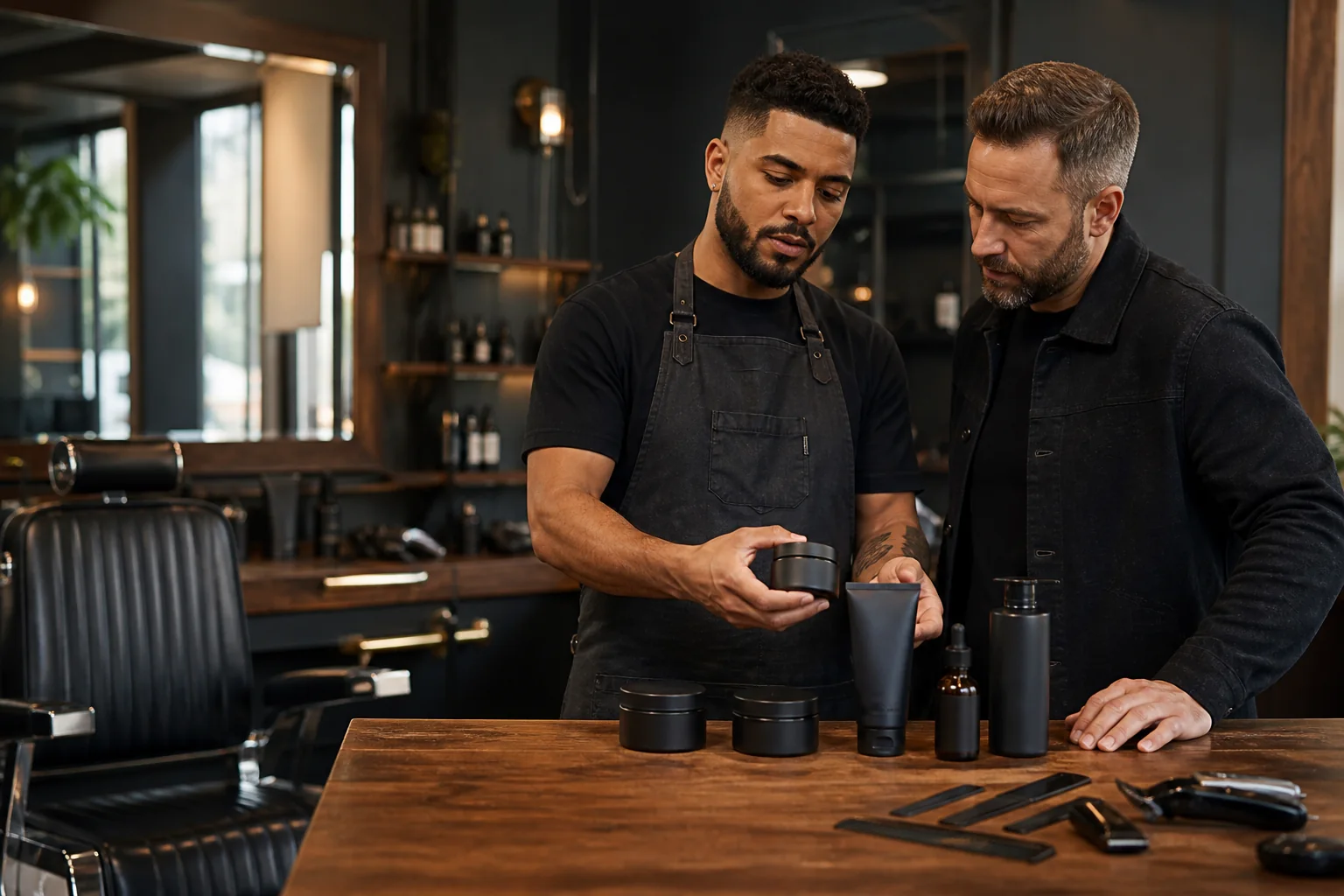
Can a barbershop create its own private label grooming products?
Yes. A barbershop can create private label grooming products when each item has a defined job in the service and a clear reason for customers to use it at home. Start with the shop’s service menu, client profile, styling preferences, desired finish, fragrance direction, packaging, retail position, and expected reorder pattern. Then choose a focused assortment instead of copying a broad grooming catalog. Shay Labs develops custom cosmetic formulations and manufactures products; it does not offer ready-made stock formulas. Qualifying founder, Pilot, or Accelerator projects may begin at 500 units depending on formula, packaging, components, testing, and production requirements. Direct manufacturing for production-ready brands generally begins at 5,000 units. A useful first inquiry names each product, its service role, formula status, package direction, quantity, and launch channel.
Which Private Label Barber Products Should a Shop Launch First?
Do not begin with a list of popular categories. Begin with the four moments where a product can improve the professional workflow or make the finished service easier to maintain.
Prep
A cleansing, conditioning, or pre-style step that prepares hair or facial hair for controlled barber work.
Perform
A product used during the service where spread, grip, slip, work time, dispensing, and cleanup affect the barber.
Finish
A pomade, cream, gel, oil, or finishing format that creates the visible texture, definition, shine, or natural finish.
Maintain
A take-home product with a simple routine role that helps the customer recreate or care for the cosmetic result.
A practical first-line filter
If two proposed SKUs solve the same service moment for the same customer, choose the clearer one first. A shop known for textured cuts may lead with a versatile finish and maintenance pair. A beard-focused shop may organize around grooming preparation, controlled application, and take-home conditioning. These are decision examples, not a stock Shay Labs catalog.
How Do You Turn a Barber Service Menu Into a Product Assortment?
Mark where barbers already reach for a product, where customers ask how to recreate the finish, and where a take-home recommendation feels natural rather than forced.
Score the service moment
- How often the service is performed
- Whether product choice changes the visible finish
- How consistently the team can demonstrate it
- Whether customers ask for at-home guidance
- How the product must dispense and handle
Score the retail moment
- Whether the product has one understandable job
- How easily a customer can use it without the barber
- Whether package size and format fit the routine
- How it sits beside the rest of the assortment
- Whether inventory and reorder assumptions are realistic
Should Barber Products Be Custom Formulated or Transferred Into Manufacturing?
The right path depends on what already exists, who is authorized to use it, and whether the formula and package can be reproduced at the intended scale.
Founder, Pilot, or Accelerator
Use this route when the customer, product job, sensory target, package, or launch plan still needs development. Qualifying projects may begin at 500 units based on requirements.
Custom formulation
Use this route when the service role and desired experience are clear but a formula must be developed and evaluated with the intended package and use.
Production-ready manufacturing
Use this route when formula authorization, documentation, specifications, testing status, components, quantities, and demand are established. Direct manufacturing generally begins at 5,000 units.
What Makes a Barber Product Practical During a Service?
A promising bench sample still has to work in repeated professional use. Evaluate the formula and package as one operating system.
Set the dose
Define how much the barber should pick up or dispense and whether the package supports that amount cleanly.
Observe the work time
Record how the product spreads, grips, slips, layers, and changes while the barber shapes the result.
Name the finish
Use specific cosmetic language for texture, definition, shine, natural appearance, softness, or control.
Check the residue
Review hands, tools, hair, facial hair, cap or closure, and workstation after realistic use.
Test the explanation
Ask whether different barbers can demonstrate the amount, method, finish, and take-home routine consistently.
Connect the package
Consider fill size, closure, labels, sourcing, compatibility, storage, and repeated handling before production.
What Should a Barbershop Include in a Manufacturing Quote Request?
A useful inquiry lets a manufacturer see the assortment, readiness, and commercial assumptions instead of guessing from a product name alone.
Shop and customer profile
Service specialties, locations, barber count, typical customer, grooming needs, retail experience, and sales channels.
Product-job map
Each proposed SKU, its Prep, Perform, Finish, or Maintain role, intended user, and sequence in the service or home routine.
Sensory scorecard
Target viscosity, pickup, spread, grip or slip, work time, finish, fragrance direction, residue, and cleanup expectations.
Formula readiness
New concept, benchmark, authorized existing formula, specifications, sample history, documentation, and available testing information.
Package direction
Jars, tubes, bottles, closures, fill sizes, labels, selected components, sourcing status, and professional versus retail needs.
Commercial plan
Quantity by SKU, launch timing, price position, shop rollout, ecommerce or wholesale plans, forecast, and reorder assumptions.
How Can a Barber Line Stay Cohesive Without Making Every Product Feel the Same?
Build cohesion through a shared audience, finish language, fragrance architecture, package family, and routine logic. Preserve a distinct performance job for every formula. Shay Labs is a Woodstock, Illinois custom formulation and contract manufacturer with more than 15 years of manufacturing experience. The facility is cGMP and ISO 22716:2007 certified. Shay Labs manufactures cosmetics and oral rinses; it does not manufacture supplements or toothpaste.
What Should Barbers Ask a Cosmetic Manufacturer Before Moving Forward?
How many private label barber products should a shop launch first?
There is no universal number. A focused three-product set can be easier to demonstrate, stock, and reorder than a broad collection. Start with distinct jobs such as service preparation, a signature finish, and one take-home maintenance product, then expand when demand shows where another format belongs.
Can professional-use and take-home barber products use different packaging?
Yes. A product used repeatedly behind the chair may need different fill size, dispensing, durability, or handling than its take-home counterpart. Formula behavior, closure choice, package compatibility, labeling, storage, and intended use should be reviewed for each selected component.
Can Shay Labs manufacture pomades, styling creams, and beard care as one line?
Shay Labs develops custom cosmetic formulations and manufactures cosmetics. The feasibility and manufacturing route for any proposed format depend on its formula, package, components, testing, quantity, and production requirements. Bring the complete proposed assortment so related products can be planned together.
Does Shay Labs offer a ready-made catalog of barber product formulas?
No. Shay Labs is a custom formulation and contract manufacturer, not an off-the-shelf or ready-made stock catalog. A project begins with your product jobs, desired experience, formula status, package direction, quantities, and commercial plan.
What minimum order applies to private label barber products?
Qualifying founder, Pilot, or Accelerator projects may begin at 500 units depending on the formula, product, packaging, components, testing, and production requirements. Direct manufacturing for production-ready brands generally begins at 5,000 units.
How should barbers evaluate grooming product samples?
Use one written scorecard across the review group. Evaluate the intended amount, pickup or dispensing, spread, work time, grip or slip, finish, fragrance, residue, washout where relevant, package handling, and fit with the service. Record observations instead of relying on general preferences.
Should a barber line focus only on beard products?
Not necessarily. Beard products can be part of a line, but the assortment should reflect the shop service menu and customer behavior. A haircut-focused shop may prioritize styling and finishing, while a beard-specialist shop may build around conditioning, grooming, and take-home maintenance.
How can several barber products feel like one brand without becoming repetitive?
Use shared principles such as audience, fragrance architecture, finish vocabulary, package family, and routine sequence while giving each formula a distinct job. Cohesion should make the line easier to understand, not force every product into the same texture or sensory profile.
What should be included in a barber product manufacturing inquiry?
Include the shop and client profile, service menu, proposed products, job of each SKU, desired texture and finish, fragrance direction, formula status, benchmarks, packaging, quantity by SKU, launch channel, target timing, and any available specifications or testing documentation.
Ready to Build Your Barber Product Assortment?
Share your shop profile, first product jobs, desired performance and finish, formula status, package direction, quantity, channel, and timing. Shay Labs will help identify the practical development or manufacturing path.