
Private Label Spa Products Manufacturer
Build a focused cosmetic product system that works for practitioner use, preserves the spa’s sensory signature, and gives guests a logical way to continue the ritual at home.
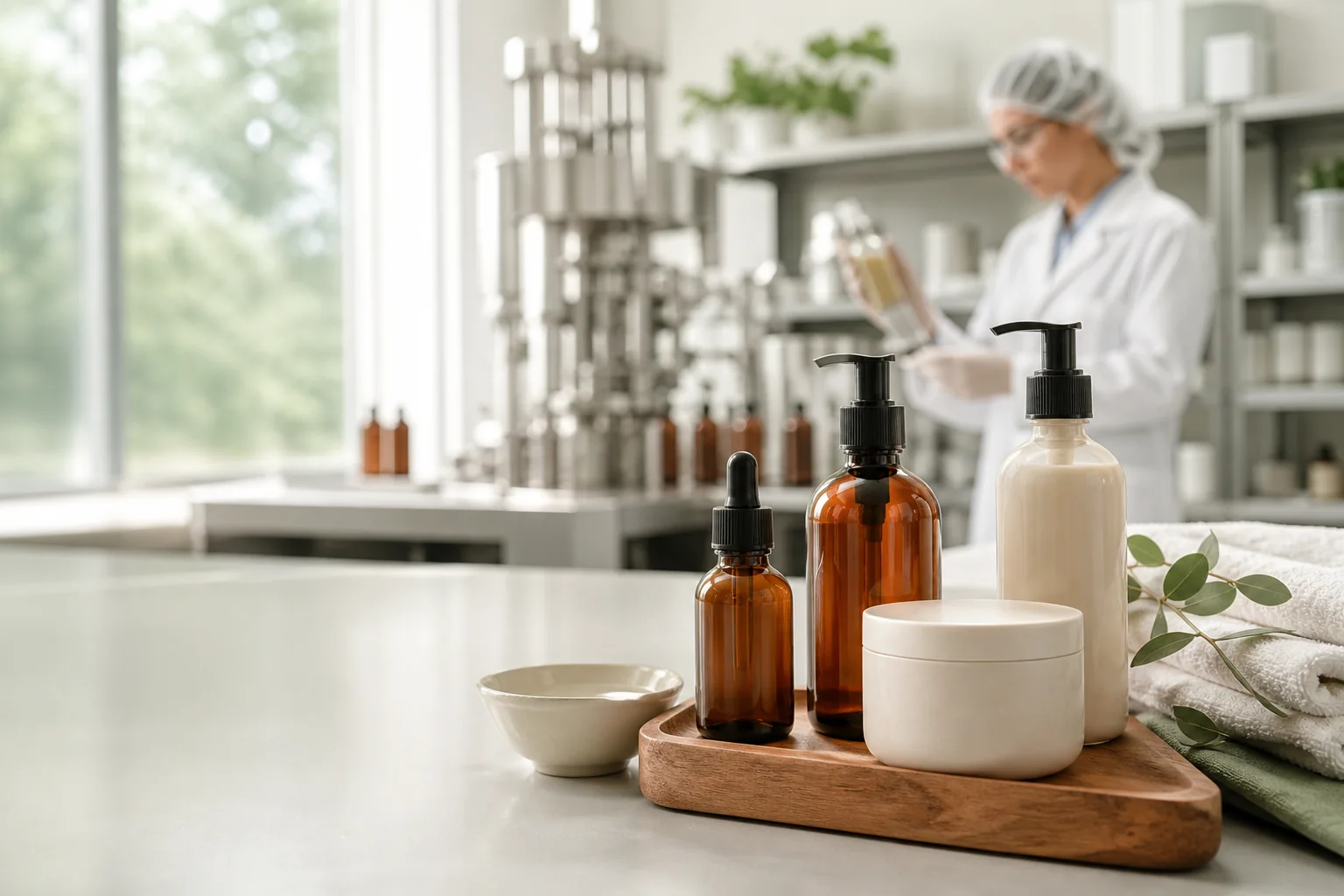
How Do You Begin a Private Label Spa Product Line?
Begin with the treatment experience, not a long product catalog. Map one signature service from preparation through finishing care, then identify which cosmetic product defines the professional treatment and which product gives the guest a useful take-home continuation. Specify each product’s role, texture, slip, absorption, finish, fragrance direction, application method, package, professional-use size, retail size, expected usage, and reorder signal. Shay Labs develops custom formulations and manufactures cosmetics rather than selling an off-the-shelf stock catalog. Direct manufacturing for production-ready brands generally begins at 5,000 units. Qualifying founder, Pilot, or Accelerator projects may begin at 500 units depending on formula, product, packaging, components, testing, and production requirements. Keep positioning cosmetic and avoid medical or therapeutic promises.
How Do You Turn a Spa Treatment Into a Product System?
Walk through the service as a practitioner and a guest. Each step should earn its place in the treatment, and any retail counterpart should have a clear continuation role rather than merely matching the label design.
Prepare
Define cleansing, wetting, warming, or other cosmetic preparation needed before the main service step.
Apply
Name the texture, application method, amount, spread, and practitioner handling the service requires.
Work
Describe slip, cushion, play time, rinse behavior, absorption, and the intended cosmetic experience.
Finish
Define the desired skin or hair feel, scent impression, appearance, and final service touchpoint.
Continue
Choose the one take-home role the guest can understand and the spa team can explain responsibly.
The six fields for every product step
Record the service moment, professional-use role, guest continuation role, sensory target, package and dispensing method, and reorder signal. This becomes the shared map for formulation, operations, training, merchandising, and purchasing conversations.
The removal test
If removing a proposed SKU does not weaken the treatment or the take-home logic, it may not belong in the first launch. Start with the smallest coherent system, then expand with evidence from real operations.
Which Spa Products Belong in the Treatment Room and at Retail?
A backbar product serves practitioner workflow. A retail product serves understandable home use. They may share a formula direction or sensory family, but their package, instructions, usage pattern, and commercial role require separate decisions.
Professional-use product
- Fits the exact service step and application method
- Supports controlled dispensing and treatment-room storage
- Has a usage assumption the spa can monitor
- Works within practitioner training and room turnover
Take-home retail product
- Has a simple cosmetic role customers can understand
- Uses consumer-appropriate packaging and directions
- Extends the sensory identity without copying the full service
- Gives staff a natural, non-medical recommendation path
How Should Professional and Take-Home Sizes Differ?
Do not choose a backbar size by simply enlarging the retail package. Define use per service, services per day, number of rooms, dispensing method, storage constraints, sanitation practices, expected retail usage, and replenishment cadence first.
Estimate product used per treatment and identify which service or practitioner variables can change that amount.
Explain where the package sits, who handles it, how it dispenses, and whether it moves between treatment spaces.
Choose a consumer size around intended cosmetic use and understandable directions, not an unsupported results timeline.
Consider pump, dropper, jar, tube, or other possibilities only after formula and workflow needs are defined and compatibility is reviewed.
Separate treatment-room opening stock, retail shelf allocation, tester needs, launch support, and planned reserve.
Name who monitors usage and inventory, how often, and what stock level begins the next planning conversation.
What Sensory Details Should Be Defined Before Formulation?
“Luxurious” is not a complete brief. Give the formulator and manufacturing team language tied to actual application and after-feel. Keep the desired positioning within cosmetic boundaries.
During application
Thickness, pickup, spread, glide, slip, cushion, drag, play time, and whether the product is rinsed or left on.
After application
Absorption pace, residue, tack, softness, smoothness, sheen, richness, and the desired cosmetic finish.
Scent experience
Fragrance family, intensity, treatment-room presence, dry-down direction, and any preferences that need project review.
Ritual fit
Sequence, tools, towels, water use, service duration context, room conditions, and the customer’s take-home step.
How Do Packaging and Dispensing Affect Spa Usability?
Packaging is part of the treatment system. Evaluate it against the formula, dispensing control, practitioner handling, storage, component supply, compatibility questions, decoration, and customer use rather than selecting by appearance alone.
Treatment station
Describe counter space, exposure to moisture, one-room or multi-room use, access during the service, and how the package returns to storage.
Dispense control
State whether the practitioner needs drops, pumps, scoops, squeezes, or another application method and how consistency will be trained.
Formula interaction
Package selection and compatibility require project-specific review. Do not assume a component is suitable because it looks appropriate for a spa.
Retail handling
Plan for customer directions, storage, closure use, product visibility, merchandising footprint, and the intended cosmetic routine.
Sourcing ownership
Identify proposed suppliers, who orders components, quantities, approval status, decoration, artwork, and delivery assumptions.
Change control
Record which formula, package, size, artwork, or quantity changes require a new feasibility, cost, testing, or schedule review.
How Should a Spa Plan Product Usage, Margin, and Reorders?
The manufacturer needs quantities by SKU, but the spa needs the logic behind them. Connect expected treatment consumption and retail demand to purchasing and inventory decisions without presenting forecasts as guaranteed outcomes.
Build a usage model
Estimate amount per service, services by type, rooms or practitioners, opening stock, expected variability, and reserve. Update assumptions after real usage data exists.
Build an assortment model
Plan units by SKU, tester needs, shelf allocation, staff education, expected attachment assumptions, and a separately stated safety-stock rationale.
Build a reorder signal
Assign an inventory owner, review cadence, trigger level, forecast update date, and the formula, component, artwork, and quantity inputs needed for another review.
What Belongs in a Spa Product Manufacturing Quote Request?
Give the manufacturer enough context to understand the service, product, packaging, quantity, and commercial system. Separate confirmed inputs from open questions.
Spa and customer
Spa type, locations or channels, signature service, customer profile, professional-use context, and the intended retail handoff.
Treatment map
Service steps, proposed product role at each step, application method, rinse or leave-on use, and why each first-launch SKU is needed.
Formula direction
Custom development or authorized formula status, intended cosmetic use, sensory targets, samples or references, and unresolved questions.
Packaging plan
Professional and retail sizes, dispensing needs, proposed components, suppliers, decoration, artwork, sourcing owner, and approval status.
Quantity and timing
Units by SKU, backbar and retail allocation, opening stock assumptions, target window, launch sequence, and any fixed or flexible dependencies.
Operating plan
Practitioner training, merchandising, customer education, usage tracking, inventory owner, reorder signal, decision makers, and open risks.
Is Shay Labs the Right Manufacturing Route for the Project?
Shay Labs is a Woodstock, Illinois U.S. custom formulation and contract manufacturer with more than 15 years of manufacturing experience. The facility is cGMP and ISO 22716:2007 certified. Shay Labs develops custom formulations and manufactures cosmetics and oral rinses. It does not offer a ready-made stock catalog and does not manufacture supplements or toothpaste.
Founder, Pilot, or Accelerator route
Use this route when the treatment map, formula, packaging, launch, or commercial assumptions still need structured development. Qualifying projects may begin at 500 units depending on requirements.
Explore the AcceleratorProduction-ready spa brand
Use this route when the authorized formula path, product requirements, components, quantities, responsibilities, and operating plan are developed enough for direct manufacturing review, which generally begins at 5,000 units.
Discuss direct manufacturingWhat Should Spa Operators Ask a Cosmetic Manufacturer?
Does Shay Labs offer a ready-made catalog of private label spa products?
No. Shay Labs develops custom formulations and manufactures products. It does not offer an off-the-shelf or ready-made stock catalog. Begin with the spa service, cosmetic product role, sensory direction, package, quantity, and launch plan you want to develop.
How should a spa decide which product to launch first?
Start with one signature treatment and identify the product step that most defines the guest experience or creates the clearest take-home continuation. A focused professional-use and retail pair is usually easier to brief, train, merchandise, and replenish than an unfocused assortment.
Can professional backbar and take-home products use different sizes?
A project can explore different package sizes or dispensing formats for professional and retail use, subject to formula, package, component, testing, and production review. Define how each size will be used, stored, dispensed, sold, and replenished before requesting a quote.
Can Shay Labs manufacture spa massage oils?
Shay Labs manufactures cosmetics, and a cosmetic massage-oil concept may be reviewed when its intended use and claims remain cosmetic. Share the desired slip, absorption feel, after-feel, fragrance direction, package, treatment use, retail role, and quantity. Project feasibility must be reviewed rather than assumed.
What should a spa sensory brief include?
Describe the treatment moment, texture, spread, slip, absorption, finish, fragrance direction, fragrance intensity, application method, rinse or leave-on use, and the feeling the customer should associate with the ritual. Use precise sensory language without turning cosmetic positioning into medical or therapeutic claims.
What packaging works for professional spa use?
The right package depends on the formula, service workflow, dispensing control, cleanliness practices, storage, component compatibility, and planned usage. Explain whether the product will sit at a treatment station, move between rooms, or be used by multiple practitioners so packaging can be evaluated for the actual workflow.
What minimum order applies to private label spa products?
Direct manufacturing for production-ready brands generally begins at 5,000 units. Qualifying founder, Pilot, or Accelerator projects may begin at 500 units depending on the formula, product, packaging, components, testing, and production requirements.
What should be included in a spa product manufacturing inquiry?
Include the signature treatment, service steps, proposed product roles, professional and retail sizes, intended cosmetic use, formula status, sensory direction, packaging ideas, quantity by SKU, sourcing responsibilities, target timing, training or merchandising plan, and known testing or component questions.
Can spa product copy make medical or therapeutic claims?
This page addresses cosmetic products and cosmetic positioning. Claims require project-specific review and should not imply diagnosis, treatment, prevention, or medical efficacy. Eye-area, esthetician, massage, or wellness context does not remove the need for disciplined cosmetic claims.
How is a spa product line different from a hotel amenity program?
A spa line is organized around practitioner workflow, a treatment ritual, sensory continuity, professional-use dispensing, customer aftercare, retail education, and reorders. A hotel amenity program is typically organized around guest-room or hospitality consumption, dispenser systems, and property supply requirements.
Ready to Build Your Spa Product System?
Share the signature service, product roles, sensory direction, professional and retail sizes, packaging ideas, quantities by SKU, formula status, launch route, and reorder assumptions. Shay Labs can help identify the appropriate development or manufacturing path.