
Private Label Cuticle Oil Manufacturer
Develop custom cuticle oil around the dose delivered at one nail, how the formula moves, how long it stays workable, and whether the finish suits a professional service or a customer’s take-home routine.
How Do You Start a Private Label Cuticle Oil Project?
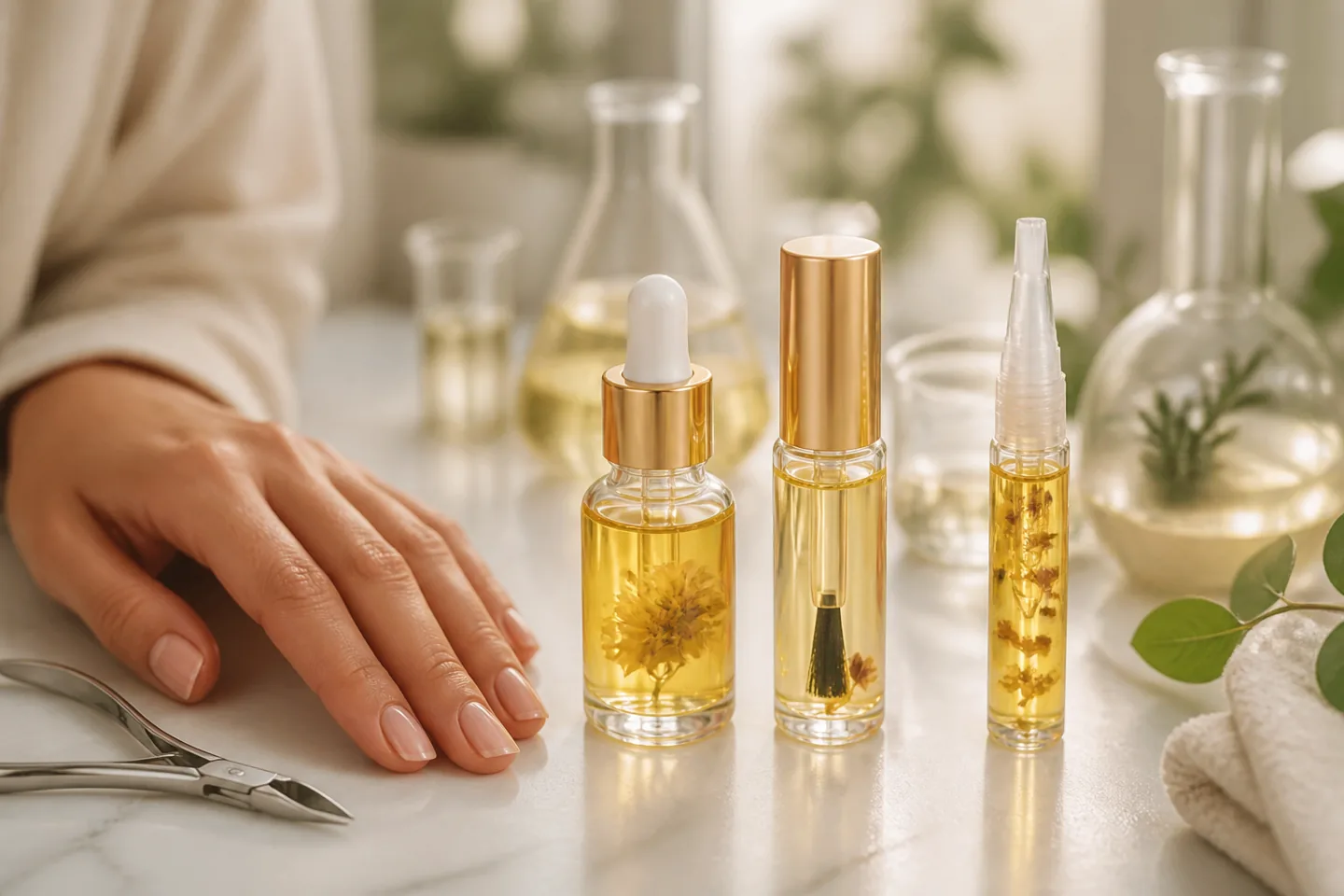
Start a private label cuticle oil project by defining one controlled application from package to finish. Identify the user, salon or take-home routine, target dose, oil flow, spread around the nail area, massage window, visible shine, residue, fragrance, applicator, package size, directions, cosmetic claims, quantity, and launch channel. Shay Labs develops custom formulations and manufactures cosmetics rather than selling ready-made stock formulas. Direct manufacturing for production-ready brands generally begins at 5,000 units. Qualifying founder, Pilot, or Accelerator projects may begin at 500 units depending on formula, product, packaging, components, testing, and production requirements. Use a Drop-to-Detail Matrix to compare each sample with the same applicator, dose, application area, massage time, and observation points before choosing a formula-package combination.
What Should a Cuticle Oil Product Brief Define?
Follow one application from the component to the final touch. Six small decisions turn vague requests such as “nourishing but not greasy” into a repeatable sample conversation.
Dispensed dose
Define one drop, one brush load, one roller pass, one click, or another controlled action and the number of nails it should cover.
Placement
Specify where the applicator touches, how accurately it reaches the intended nail area, and whether it drips before distribution.
Spread
Describe slip, cushion, drag, migration, brushability, and how far the measured dose travels around the nail area.
Massage window
Set the preferred working time before the formula becomes too thin, too dry-feeling, or too transferable for the routine.
Finish
Record visible shine, surface residue, fragrance persistence, softness perception, transfer, and dry-down at defined times.
Next action
State whether the user returns to service work, handles a phone, applies another cosmetic step, or stores the product for travel.
Write the one-dose job
“One package action should cover this application area, allow this amount of controlled massage, and reach this finish before the user’s next action.” Rank the tradeoff if rich cushion conflicts with a faster, lower-transfer finish.
Annotate references
Bring products you like and dislike, but identify the exact applicator, dose, flow, spread, fragrance, finish, and use context. A bottle photo alone does not communicate how the system behaves.
Which Cuticle Oil Applicator Fits the Routine?
The applicator is part of the product. Compare how it picks up formula, controls dose, touches the nail area, closes, travels, and supports directions rather than choosing only by shelf appearance.
Brush bottle
Familiar nail-category motion with visible placement. Review brush load, wiping, bristle behavior, bottle neck, repeat dipping, and service cleanliness.
Dropper
Makes a drop-based direction intuitive but may create an oversized dose or migration. Review drop formation, control, glass or plastic components, and closure security.
Roller format
Provides direct contact and repeated passes. Evaluate flow start, ball movement, transfer, application width, cleaning expectations, and leakage.
Pen or click format
Can support targeted, portable use. Evaluate priming, click-to-dose consistency, brush flow, cap security, decoration area, and customer instructions.
How Should a Brand Evaluate Cuticle Oil Samples?
Control hand preparation, applicator, dose, application area, massage time, observation points, and next activity. Otherwise the evaluator may be comparing use methods rather than formulas.
Pickup and release
Record priming, brush load, drop formation, roller start, dispense lag, drips, and the amount left on the component.
Placement and migration
Observe contact accuracy, spread beyond the intended area, pooling, running, and whether one dose covers the planned number of nails.
Massage and finish
Compare slip, cushion, drag, working time, visible shine, residue, transfer, softness perception, and fragrance at set intervals.
Return to routine
Test the intended next action, such as professional service work, phone handling, travel storage, or bedtime use, without making unsupported public claims.
What Cosmetic Claims and Directions Fit Cuticle Oil?
Build language around grooming, conditioning feel, moisturized appearance, shine, sensory experience, and a clearly described application routine when those statements are accurate and supportable.
Conditioned-looking cuticles, a groomed nail-area appearance, visible shine, and a moisturized appearance may fit when accurate for the final product.
Lightweight or rich feel, slip, cushion, fragrance, massage experience, residue, and finish should match a controlled use method.
Name the application area, component action, amount, distribution or massage step, frequency, routine sequence, and storage expectations.
How Do Salon and Retail Cuticle Oils Differ?
A professional service product and a take-home item may share a cosmetic concept but face different dosing, handling, instruction, merchandising, and replenishment demands.
Professional station logic
Prioritize repeatable service dose, stable placement on the work surface, fast closure handling, contamination-conscious workflow, minimal interruption, applications per unit, and how the product fits the service sequence.
Take-home retail logic
Prioritize portable closure security, simple self-use directions, controlled dose, package education, shelf presence, price architecture, expected usage, reorder timing, and whether the applicator makes the benefit easy to demonstrate.
How Does Cuticle Oil Move From Concept to Manufacturing?
The development path should keep formula, applicator, directions, cosmetic positioning, components, quantity, and channel aligned as decisions become more specific.
Define one-dose use
Complete the Drop-to-Detail Matrix, user, professional or retail context, priorities, references, directions, and claims boundary.
Develop and compare
Align custom formula direction with controlled sample feedback using the same dose, applicator, massage time, and observation points.
Resolve the component
Coordinate formula flow with brush, dropper, roller, pen, or another system, plus fill, closure, decoration, packout, and project-specific compatibility questions.
Review production readiness
Confirm formula status, specifications, components, artwork, quantities, responsibilities, dependencies, and the appropriate Shay Labs project route.
What Belongs in a Cuticle Oil Quote Request?
Separate confirmed specifications, preferences, and unresolved questions so the manufacturing review can see which decisions are ready and which still require development.
Target customer, salon or take-home role, application moment, frequency, number of nails, next action, channel, and related products.
Dose, placement, spread, massage window, finish, next action, controlled sample method, ranked priorities, and acceptable tradeoffs.
Custom development or authorized formula status, annotated references, flow, slip, cushion, finish, fragrance, preferences, and exclusions.
Draft cosmetic positioning, application area, applicator action, amount, massage or distribution step, frequency, and words needing review.
Component specifications, supplier, sourcing owner, samples, fill, closure, decoration, secondary package, case pack, shipping context, and alternatives.
Units, channels, target window, artwork status, decision makers, pricing context, replenishment assumptions, and unresolved dependencies.
Which Shay Labs Route Fits a Cuticle Oil Project?
Shay Labs is a Woodstock, Illinois U.S. custom formulation and contract manufacturer with more than 15 years of manufacturing experience. The facility is cGMP and ISO 22716:2007 certified. Shay Labs develops custom formulations and manufactures cosmetics and oral rinses. It does not offer a ready-made stock catalog and does not manufacture supplements or toothpaste.
Founder, Pilot, or Accelerator route
Use this route when the concept, custom formulation, precision package, sample method, or launch plan needs structured development. Qualifying projects may begin at 500 units depending on project requirements.
Explore the AcceleratorDirect manufacturing review
Use this route when authorized formula status, specifications, components, claims direction, quantities, and responsibilities are developed enough for direct review, which generally begins at 5,000 units.
Discuss direct manufacturingWhat Should Brands Ask a Cuticle Oil Manufacturer?
Does Shay Labs sell a ready-made cuticle oil from a stock catalog?
No. Shay Labs develops custom formulations and manufactures cosmetics rather than offering an off-the-shelf stock catalog. A cuticle oil project should define the user, nail-care routine, formula feel, applicator, controlled dose, finish, fragrance, package, cosmetic claims, quantity, and launch context.
Can Shay Labs develop a custom cuticle oil formula?
Shay Labs develops custom cosmetic formulations. Project review considers the intended user, professional or take-home use, oil flow, spread, massage window, finish, fragrance direction, applicator, package, cosmetic positioning, components, testing, quantity, and production requirements.
Which applicator is best for cuticle oil?
There is no universal best applicator. Brush bottles can support a familiar polish-like motion, droppers can make dose visible, roller formats change contact and flow, and pen or click formats can support portability and targeted use. The formula and component must be reviewed together for dose control, leakage, pickup, wiping, filling, decoration, shipping, and compatibility.
How should a brand compare cuticle oil samples?
Use the same hand preparation, application area, applicator, dose, massage time, observation times, and activity after application. Record flow, spread, migration, cushion, drag, fragrance, visible shine, residue, transfer, and the time it takes to reach the intended finish.
Can cuticle oil be marketed for nail growth or healing?
Do not assume those claims fit a cosmetic product. Keep positioning tied to accurate cosmetic grooming, conditioning feel, moisturized appearance, shine, softness perception, and sensory experience when supportable. Avoid unsupported medical, healing, anti-fungal, infection, inflammation, tissue-repair, or guaranteed nail-growth claims.
Should salon and retail cuticle oils use the same package?
Not necessarily. A professional station may prioritize repeated access, controlled service dosing, stability on a work surface, cleanliness, and refill or replacement workflow. A take-home item may prioritize portability, closure security, simple directions, perceived value, and repeat purchase. One formula can still require different package and instruction decisions by channel.
What bottle size should a cuticle oil brand choose?
Choose size from the intended dose, applications per package, professional or retail context, price architecture, portability, package availability, decoration area, shipping, and reorder expectation. A small bottle is not automatically a low-cost project because applicators, closures, decoration, filling, and secondary packaging can drive complexity.
What should directions for cuticle oil explain?
Directions should identify the application area, amount or applicator action, distribution around the nail area, massage step if intended, frequency, and any routine sequencing. The words should match the actual formula flow, package dose, cosmetic positioning, and use experience.
What are Shay Labs’ minimum order quantities for cuticle oil?
Direct manufacturing for production-ready brands generally begins at 5,000 units. Qualifying founder, Pilot, or Accelerator projects may begin at 500 units depending on formula, product, packaging, components, testing, and production requirements.
What belongs in a cuticle oil manufacturing quote request?
Share the target customer, professional or retail context, Drop-to-Detail Matrix, formula status, annotated references, sensory targets, fragrance direction, claims and directions, applicator and package specifications, units, channels, target window, artwork status, sourcing responsibilities, and unresolved dependencies.
Ready to Discuss Custom Cuticle Oil?
Share your Drop-to-Detail Matrix, formula direction, applicator, cosmetic claims, directions, quantity, and launch context. Shay Labs can review the appropriate development or manufacturing path.